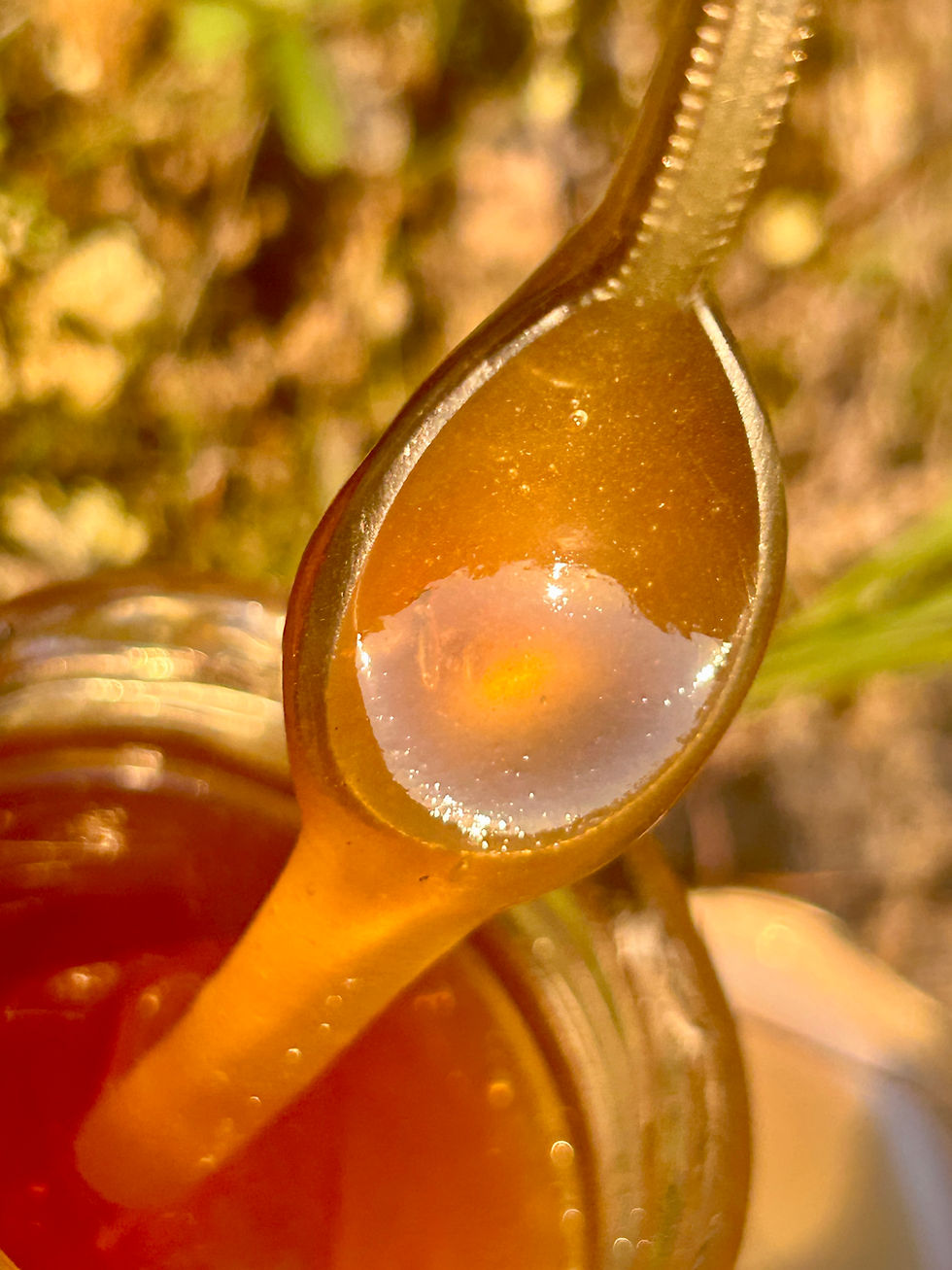
The unreachable honey of Theodoros

We are incredibly proud to have secured a number of jars of this exceptional honey. Deep in the rugged Samaria Gorge of Crete, Theodoros Viglis produces his limited honey harvest in the traditional way, right in the middle of a UNESCO-protected nature reserve. The honey reflects centuries of family tradition and the beekeeper's craftsmanship, a rare natural product with an intense aroma, layered flavor, and pure, natural richness.
Family tradition
Descendants of the proud classical Dorians, the Viglis family has been involved in beekeeping since antiquity. Theodoros Viglis has followed in his family's footsteps since his youth, and every batch of honey reflects generations of knowledge and experience regarding Cretan nature. With dedication and love for the craft, he carries on this centuries-old tradition, from bee to pot.

Samaria Nature Reserve (UNESCO protected)
Theodoros is the only one who produces and harvests honey in the Samaria Nature Reserve. His beehives are situated in a carefully isolated location, deep within the rugged Samaria Gorge, in a unique ecosystem with unparalleled biodiversity , where rare herbs, wildflowers, and endemic plants thrive. The microclimate of the steep, rocky slopes—dry, sunny, and rich in minerals—ensures nectar of exceptional quality, resulting in a honey that is intensely flavorful, rich in aroma, and found nowhere else in the world.
The bees of Viglis contribute to the preservation of the fragile flora of the Samaria Gorge, pollinate more than 300 rare and endangered plants, and thus help maintain this unique ecosystem.

Expedition to the peaks of pure nature
Every spring, Theodoros spends weeks searching for the perfect spot for his beehives. Finding these locations requires patience and experience: the hives are placed on steep, dry slopes among rocks, wild herbs, and rare mountain flora, an area that is barely accessible.
Reaching this high-altitude bee location is a true expedition: hours-long hikes through the gorge.
In August, he returns with a team for the harvest. The harvesting process lasts up to two weeks. Reaching these high-altitude bee sites is a true expedition lasting days: a trek of hours through the gorge, carrying all the harvesting materials. For this, he uses traditional Cretan mules , animals that have been accustomed to the narrow, steep mountain paths for generations. These mules carry the weight effortlessly and responsibly, without endangering their well-being. Tools such as pulleys are used to hoist the materials up.
After collecting the honeycombs, the honey is extracted on-site, an intensive process during which Theodoros sometimes works uninterrupted for 48 hours. Next, the tins are lowered from the steep mountains using pulleys, after which his trusted mules transport the precious finished product along the narrow mountain paths to civilization. This small-scale approach results in a limited and exclusive production , with only a small batch released each year.
After the harvest, the honey tins are then lowered from the steep mountains using pulleys and transported by mules along the narrow mountain paths to civilization.
Why so remote?
Pure, uncontaminated nature
The bees come into contact exclusively with wild, unsprayed herbs . There is no risk of pesticides, pollution, or monocultures, resulting in exceptionally pure honey with a unique botanical composition.
More intense flavor due to extreme conditions
On the dry, high-altitude mountain slopes, the herbs grow slowly and vigorously, with a high content of essential oils. As a result, the nectar collected by the bees is richer and more concentrated, resulting in honey with an intense aroma and a layered flavor .
Nature conservation & vegetation
Theodoros Viglis's honey actively supports the conservation of the fragile flora and biodiversity of the Samaria Gorge, which is home to more than 300 endangered plants and herbs. His bee colonies pollinate rare and endangered mountain flora, thereby contributing to the preservation of this unique ecosystem.
Traditional use and applications
Honey from the Samaria Gorge is rich in natural enzymes, minerals, and antioxidants, and is traditionally valued for various uses:
Skincare – Can have a soothing effect on minor wounds, skin irritations, and dryness.
Respiratory tract and throat – Traditionally used for colds and sore throats, can help provide a soothing sensation in the throat.
Digestion – Traditionally supports a healthy stomach and intestines and can contribute to a balanced gut flora.
General vitality – Rich in antioxidants and minerals, which are traditionally valued for supporting the natural immune system.
Please note: these are traditional uses and nutritional claims; effects may vary from person to person.